
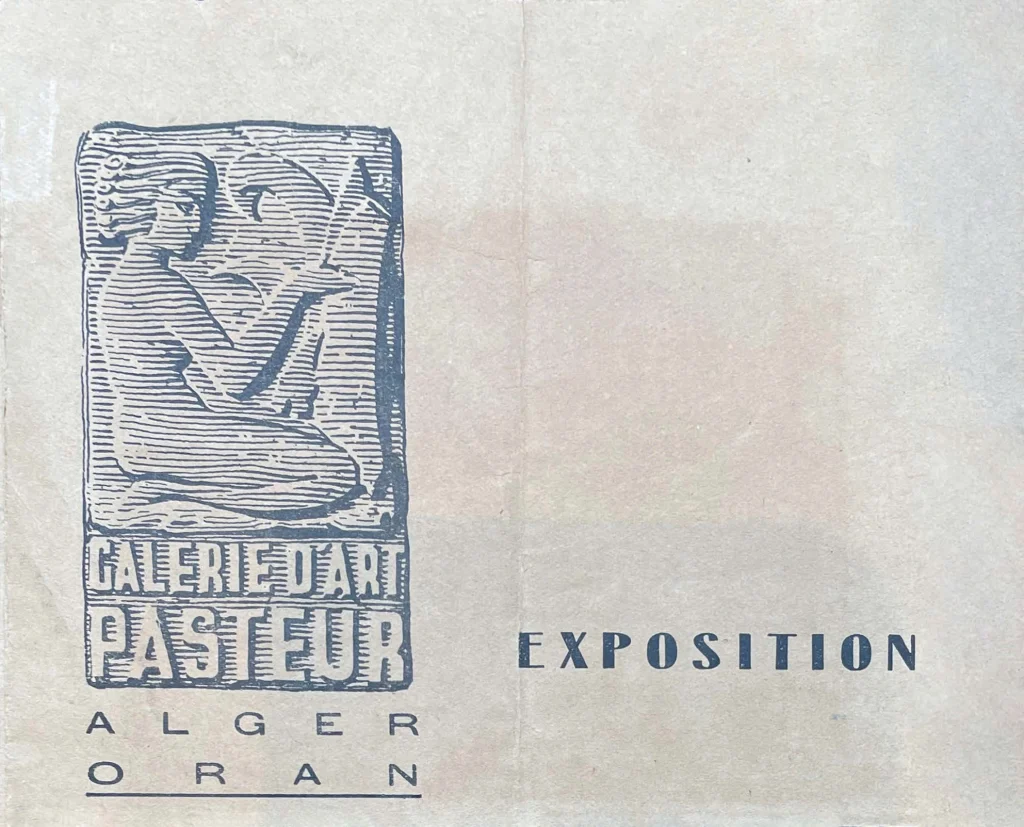
In 1942, as World War II was engulfing Europe, Paris – the world’s center of art – was almost paralyzed. Against this backdrop, an artistic space quietly shifted to Algiers in distant North Africa, then still part of the French colonial system.
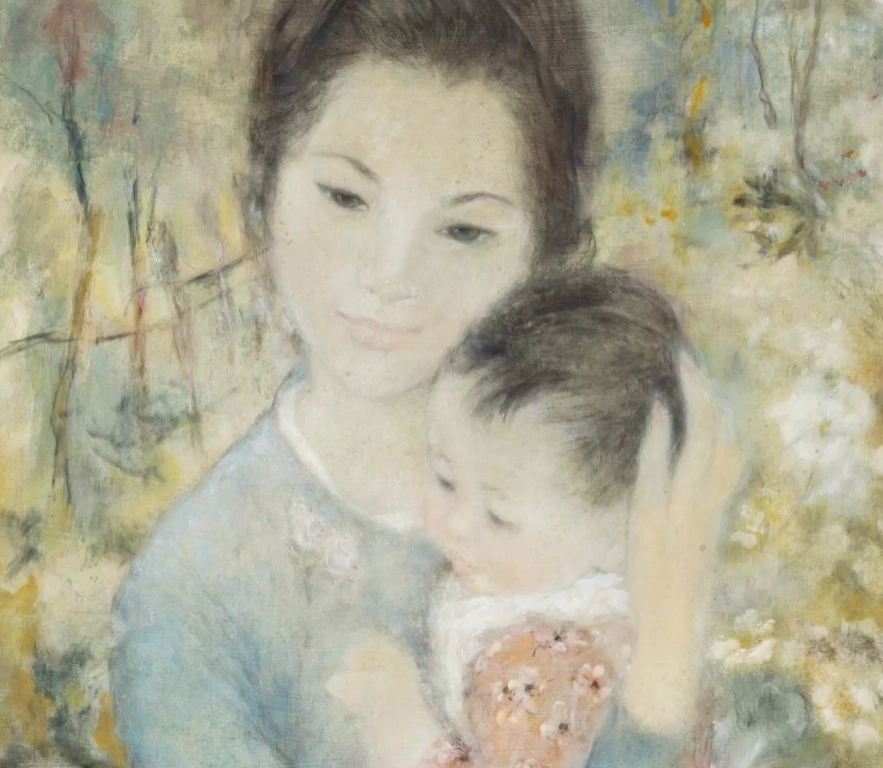
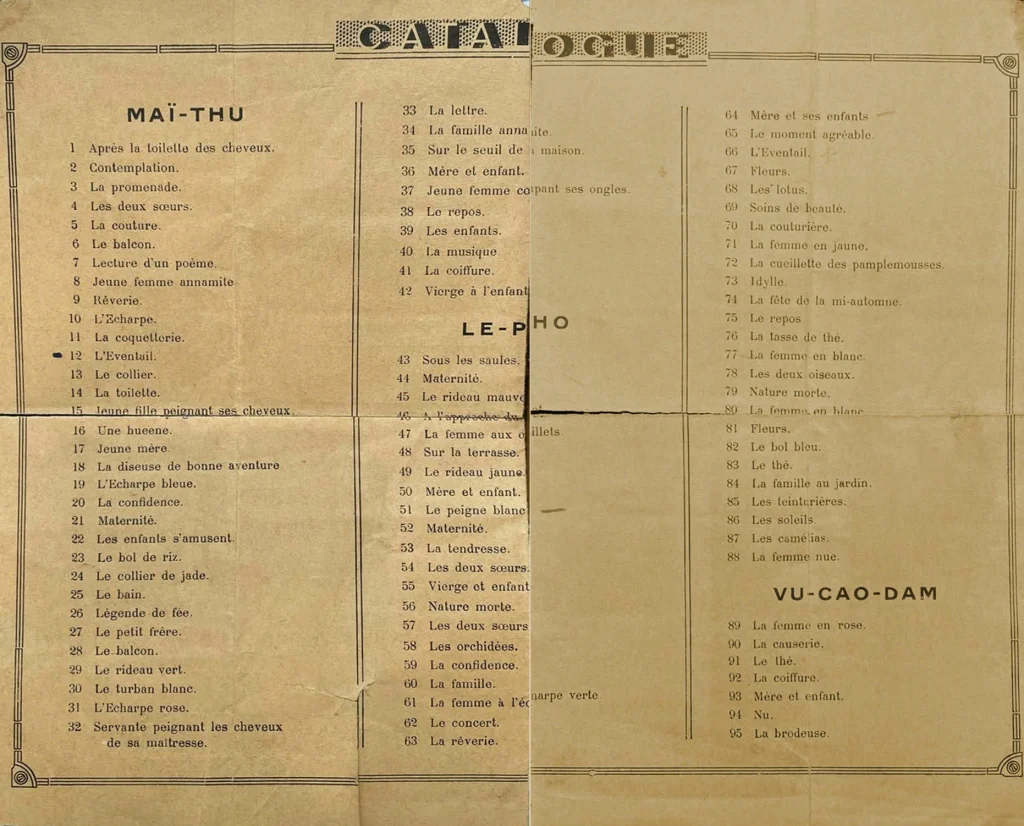
At the Galerie d’Art Pasteur in Algiers, Mr André Romanet – the owner of the Galerie de Romanet – organized a series of exhibitions from 1942 to 1944, showcasing the works of three Vietnamese artists from the École des Beaux-Arts de l’Indochine – the Indochina Fine Arts College – Lê Phổ, Mai Trung Thứ, and Vũ Cao Đàm. During those two years, a total of 95 works were presented: Lê Phổ with 42 works; Mai Trung Thứ with 45 works; and Vũ Cao Đàm with 7 works. This is not just a simple art exhibition, but a historical moment when (perhaps) for the first time, three Vietnamese artists have exhibited their works in the midst of one of the most unstable periods in world history.
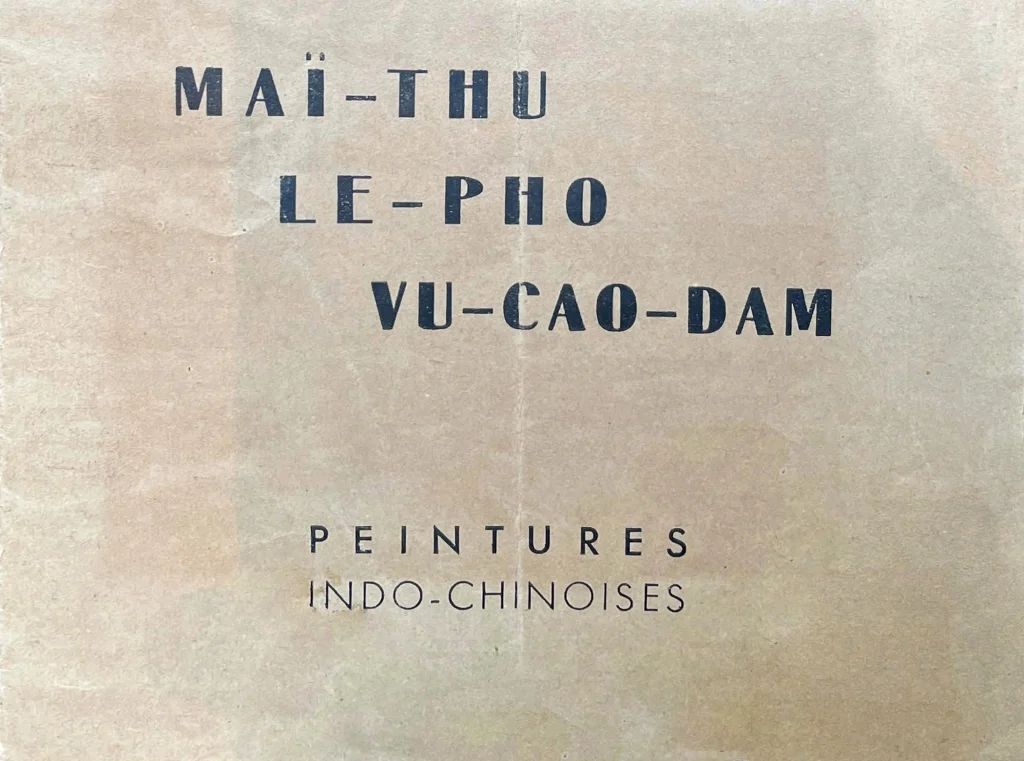
The prominent and overarching theme in the exhibition of the three artists is the intense longing for their homeland. This feeling is expressed through images of people, as well as the characteristic customs and traditions of Việt Nam.
While Paris was silent because of the war, in Algiers, a place a quarter of the world away from Việt Nam, artworks imbued with character and soul of Việt Nam were exhibited and became a much-anticipated event; especially the appearance of King Hàm Nghi [1], his presence is an honor for the exhibition.
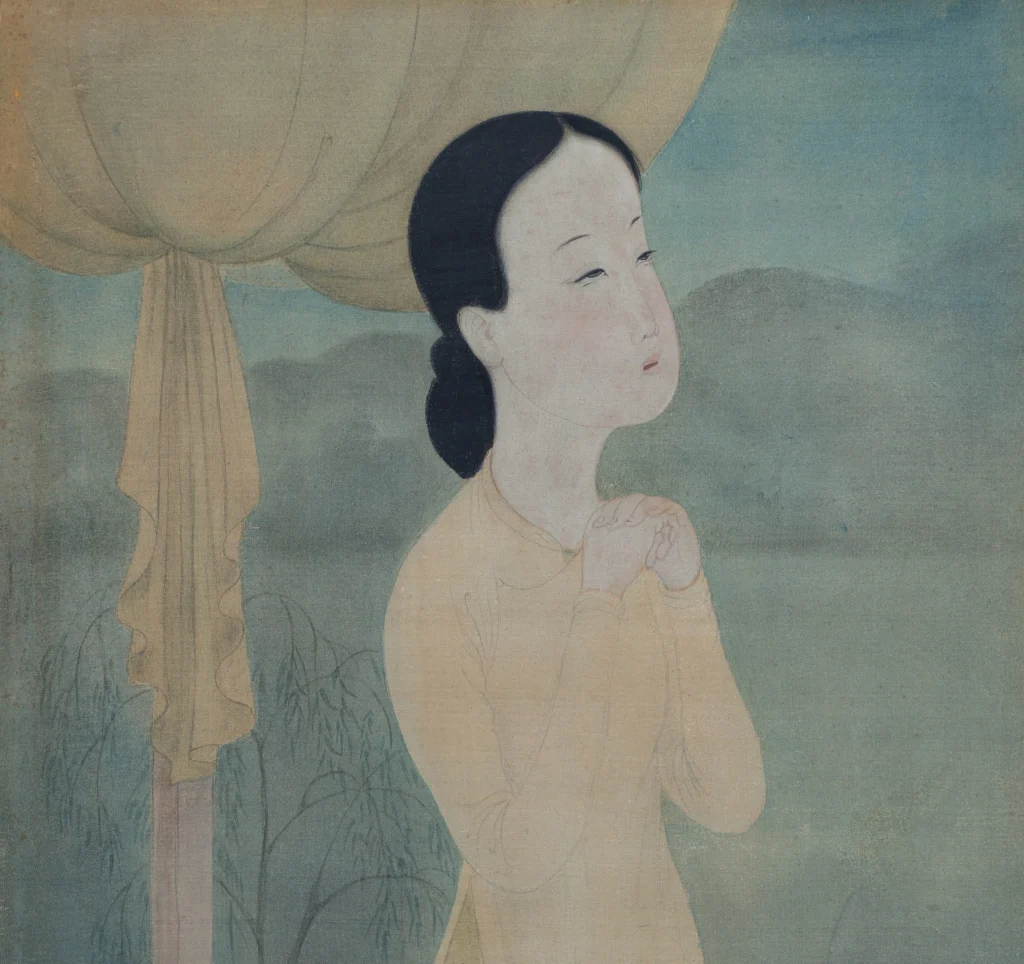
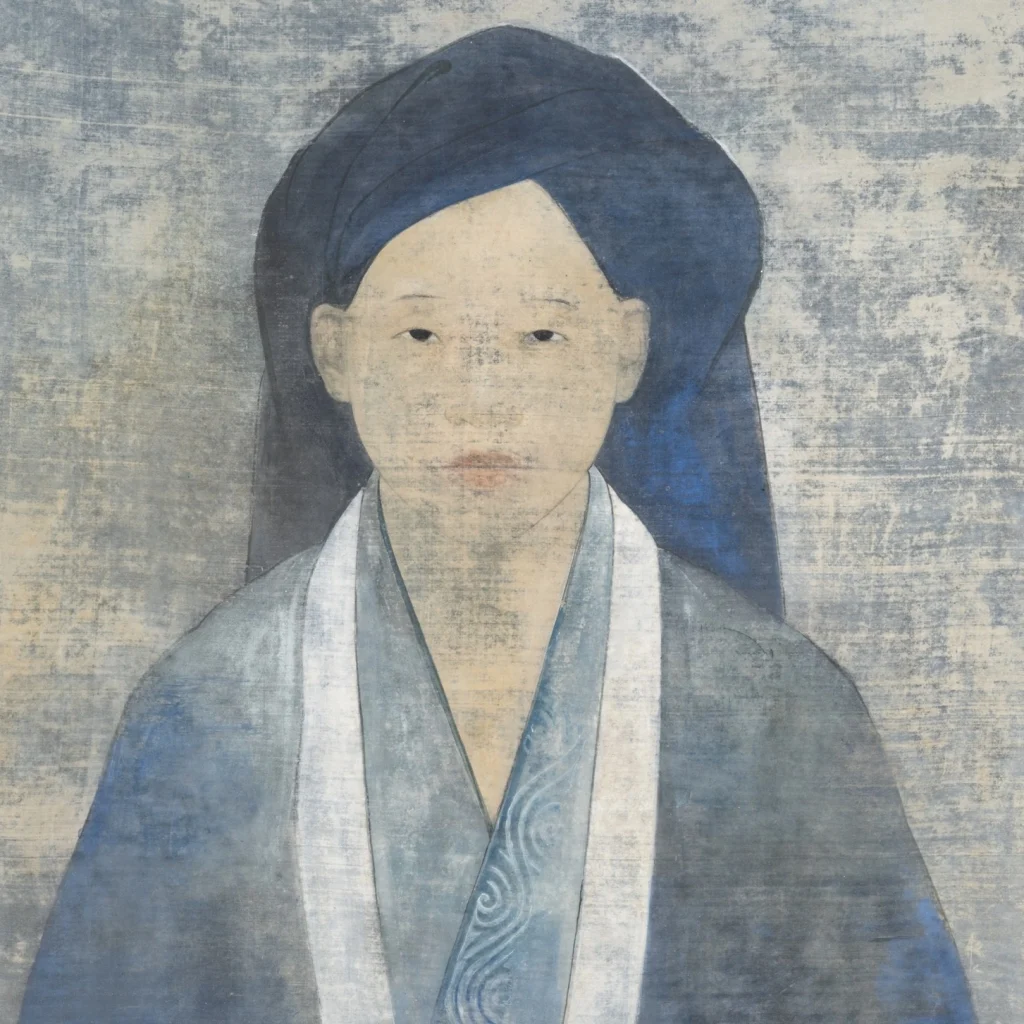
By 2026, after 84 years, some of the works that were once displayed in the exhibition have gradually reappeared on the auction market and received much attention from collectors and art lovers. Mai Trung Thứ’s silk painting “The green scarf”, numbered 19 in the exhibition catalog, and later was a piece of King Hàm Nghi’s art collection.
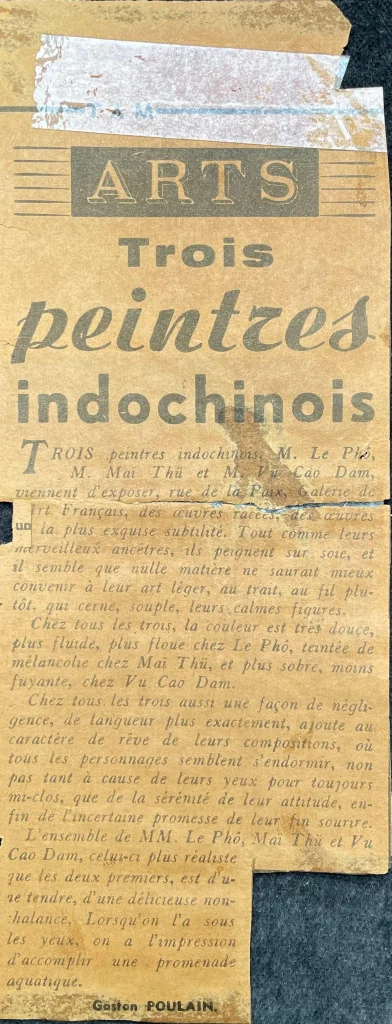
An article about the exhibition in Algiers of Lê Phổ, Mai Thứ, Vũ Cao Đàm
In the auction “L’Âme du Vietnam: Arts anciens et modernes – Soul of Vietnam: Ancient and Modern Art,” held on April 11, 2026, by Millon, Mai Trung Thứ’s silk painting “Les enfants s’amusent”, numbered 22 in the catalog of the 1942 Algiers exhibition, stood out as a noteworthy highlight.
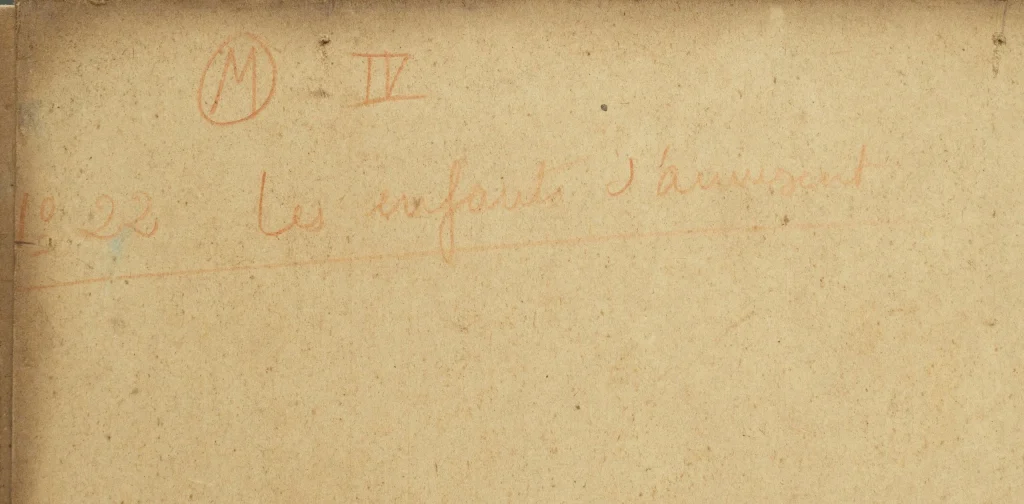
The back of the work “Children playing lion dance” was written: 22 – Les enfants s’amusent, which is number 22 in the catalogue of the exhibition in Algiers
The work not only represents Mai Trung Thứ’s characteristic style in silk, but it also bursts into a space rich in the colors of traditional Vietnamese folk festivals. Children playing lion dance [2], created in 1942, is a work in which he imbues intense emotions, hidden in the stream of nostalgic thoughts about his homeland, soft and profound.
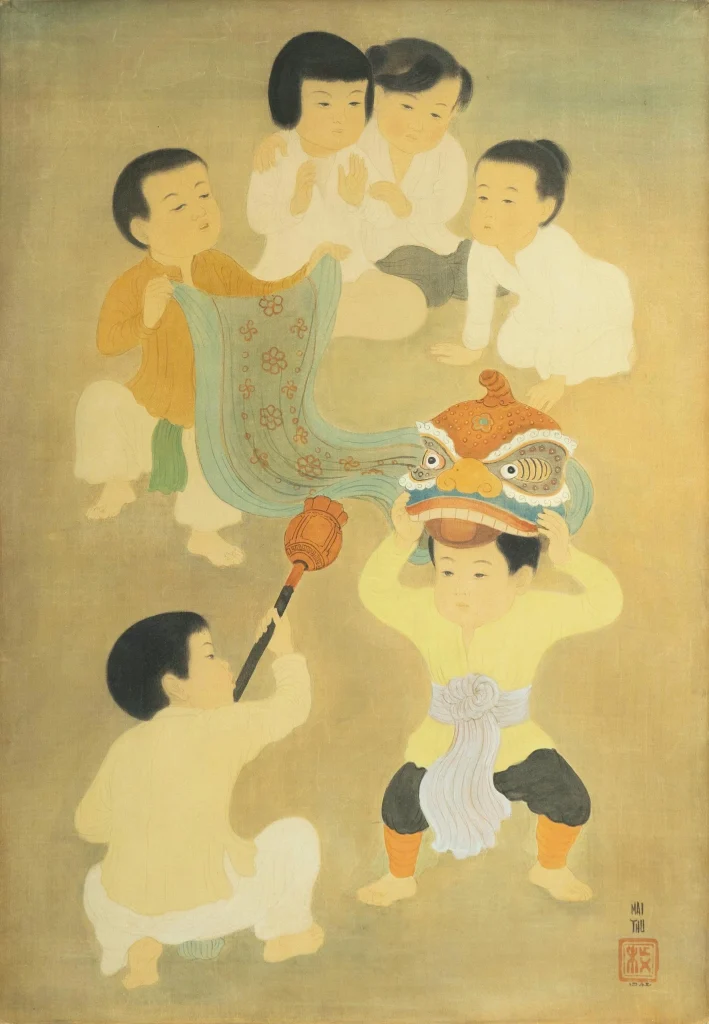
Mai Trung Thứ was particularly successful in creating works on the theme of children and women. Children playing lion dance is one of his outstanding works about the world of childhood. The work leads viewers into an emotional state of rediscovery, with detailed descriptions of a folk game carrying meaningful messages. The visual impression focuses on the group of three boys dancing, with rhythmic movements and innocent, eager exspression. The lion-leading stick, the lion’s head, the patterns on the lion’s body… are described in detail with vivid lines. The figure that attracts attention is the boy who dances with a stick to lead the lion dance, playing the role of guide and direction, he connects everyone in the game. Behind the dance group are three girls watching intently, their emotions seemingly wanting to rush into the vibrant, inviting atmosphere.
With a harmonious and balanced composition and colors, Mai Trung Thứ has subtly evoked in viewers an unprecedented sense of discovery from a folk game deeply rooted in Vietnamese culture.
[1] King Hàm Nghi lived in Algiers from 1889 until 1944, when he passed away.
[2] The title in the official catalog in 1942 was “Les enfants s’amusent” – translated as Children playing lion dance to suit the content.
MAI TRUNG THỨ (1906 – 1980)
“Les enfants s’amusent” – Children playing lion dance, 1942
Ink and colour on silk
Signed, stamped, and dated in the lower right corner
Titled on the back
68,5 × 49,6 cm
Provenance:
– Private collection of the Goldschmidt family.
– After becoming victims of deportations during World War II, the Goldschmidts settled in Argentina in 1947.
– The grandmother of the current owner then lived between Buenos Aires and Paris, where she purchased the work before bringing it back to Argentina. Held within the family ever since, the work has been passed down through generations to its current owner.
This lot is being auctioned in collaboration with the Argentinian auction house Martín Saraáchaga Subastas.
Millon
Duplex – April 11th, 2026
HỒN VIỆT: NGHỆ THUẬT XƯA VÀ HIỆN ĐẠI
L’ÂME DU VIETNAM: ARTS ANCIENS ET MODERNES
Contact:
info@millon-vietnam.com
+84 (0)7 06 43 06 88